Why German Tank Losses Were So High in the Battle of the Bulge
The Ardennes Offensive was supposed to be a return to the “old magic”—a winter surprise attack that would smash through thin American lines, sprint to the Meuse, and force a political collapse in the Western Alliance. German commanders counted on armored speed and shock: the Panther’s gun, the Tiger II’s armor, and a concentrated punch that could still be terrifying in close combat.
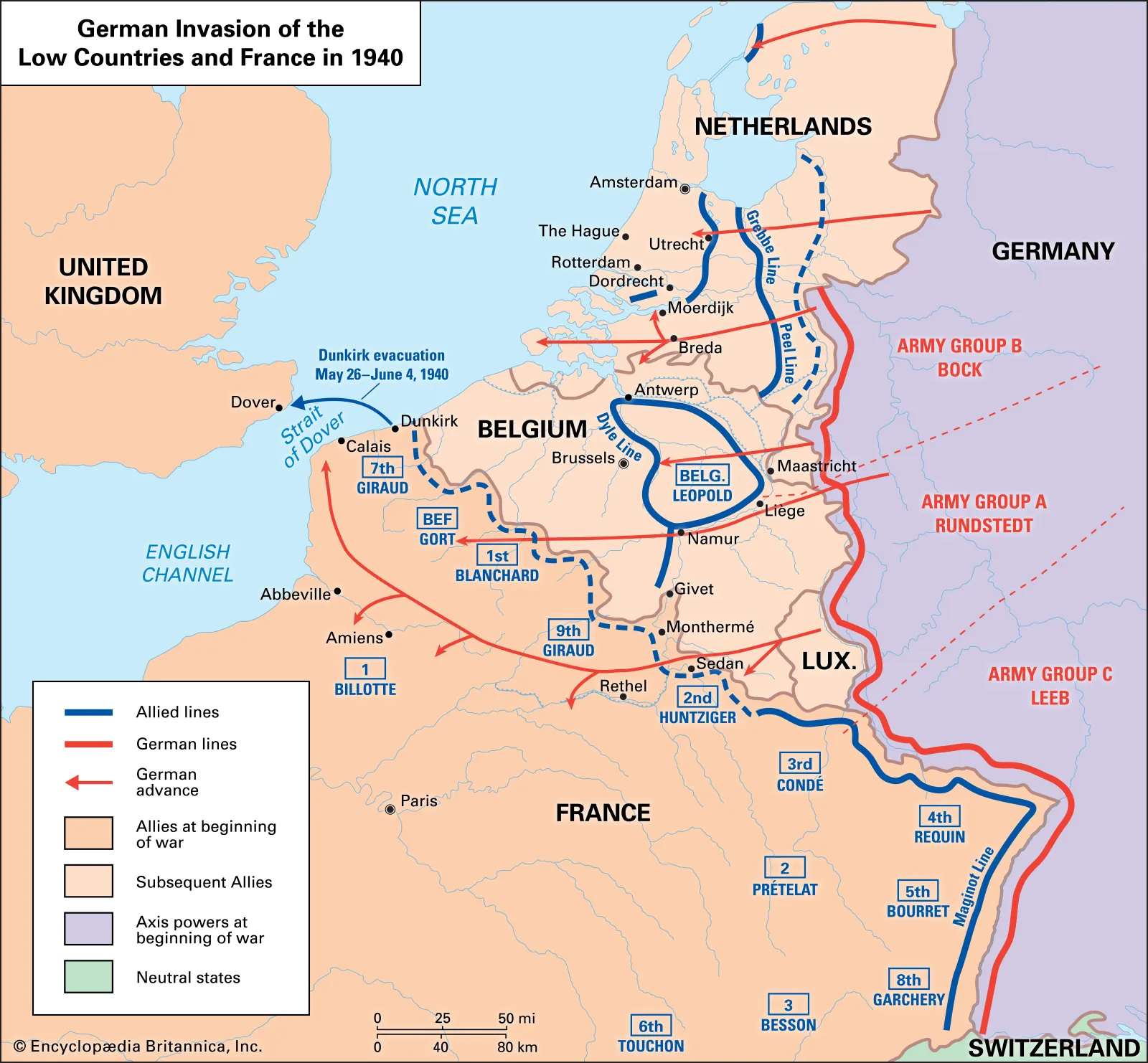
But the Ardennes was never a tank playground. It was a place where dense forest, steep folds of ground, narrow valleys, and a road network that funneled movement into a few predictable routes punished any force that depended on fast, uninterrupted armored thrusts. In the Bulge, the terrain didn’t just slow German tanks—it shaped how they died: clustered on roads, trapped at chokepoints, pinned in villages, and turned into ambush targets when they couldn’t maneuver. (The Tank Museum)
Below is the core reason German tank losses were so high: the Ardennes created forced movement, and forced movement created predictable armor—exactly what defenders need to kill tanks efficiently.
The Ardennes problem: armor needs freedom; the forest removes it
In armored warfare, a tank’s protection is not just its armor. It’s also its ability to move: to angle, to flank, to back out, to shift to a better firing position, and to avoid presenting the same profile for too long.
The Ardennes took that freedom away. Heavily forested hills restricted off-road movement, and there were only a limited number of usable routes for vehicles. That made German avenues of approach easier to anticipate—and it also meant German formations could collide with each other on the same few roads, compounding delays and confusion. (The Tank Museum)
German planning relied on speed—so every delay was more than an inconvenience. It was a multiplier: delays consumed fuel, increased exposure, and turned coordinated thrusts into stalled columns. (The Tank Museum)
“Limited routes” becomes chokepoints: roads, bridges, and towns as armor funnels
Narrow roads magnified every problem
Even when the Ardennes offered “good” roads, they were often narrow, winding, and constrained by the terrain—roads with blind turns, narrow village streets, and constant dips and rises across ravines. (Ibiblio)
In places, the improved roads were still only about 22 feet wide—fine for ordinary traffic, but punishing when you’re trying to move tanks, halftracks, supply trucks, and recovery vehicles in both directions in winter conditions. (Ibiblio)
Cuts, embankments, and soft shoulders trapped tanks on the pavement
In the Ardennes, many roads ran through “cuts” (banks on either side), with steep edges that prevented vehicles from easily pulling off. In at least one documented sector, maneuver off the road was effectively limited by the road cut on one side and a stream on the other—turning the route into a corridor. (Webdoc)
That matters because when armor is road-bound, you don’t need to “beat” it everywhere—you only need to stop it at one point.
Bridges and towns became choke valves
Bridges—especially over rivers and smaller streams—were natural choke valves. So were towns sitting on those crossings. Engineers could mine approaches, prepare demolitions, or force delays long enough for defenders to organize. Minefields and blown bridges are specifically noted as early obstacles that hindered German movement and contributed to delays in getting panzer forces forward. (The Tank Museum)
And when a single bridge, a single intersection, or a single village street is all an armored column has, a tank is no longer a hunter. It’s a vehicle in a traffic lane.
Suggested image placement:
Insert image: “Traffic jam in the St. Vith area” (see image pack below). (Wikimedia Commons)
The Ardennes ambush equation: stop the column, then kill it
Once armor is forced onto a road network, defenders can apply a brutal logic:
- Predict the route (because there are few usable routes).
- Create a stop (mines, roadblocks, destroyed bridges, craters, felled trees, knocked-out lead vehicle).
- Kill vehicles while they’re stuck (anti-tank guns, bazookas at close range, artillery concentrations, and later air attacks).
In wooded terrain, ambushes gain extra advantages: concealment, short engagement ranges, and limited visibility that reduces the attacker’s ability to identify where fire is coming from.
A U.S. Army historical account describes a fight along a road where maneuver was restricted; at a sharp bend, German assault guns opened fire, and American troops responded with close-range anti-tank weapons. In that engagement, a bazooka round struck an assault gun at roughly 50 yards, and additional bazooka teams destroyed more vehicles as the Germans tried to push the road. (Ibiblio)
That kind of action is exactly what chokepoint terrain produces: tight bends, short fields of view, and vehicles forced into predictable positions.
Suggested image placement:
Insert image: “US antitank gun covers the approach… near Vielsalm” (Wikimedia Commons)
Winter conditions didn’t just slow tanks—they made “minor damage” fatal
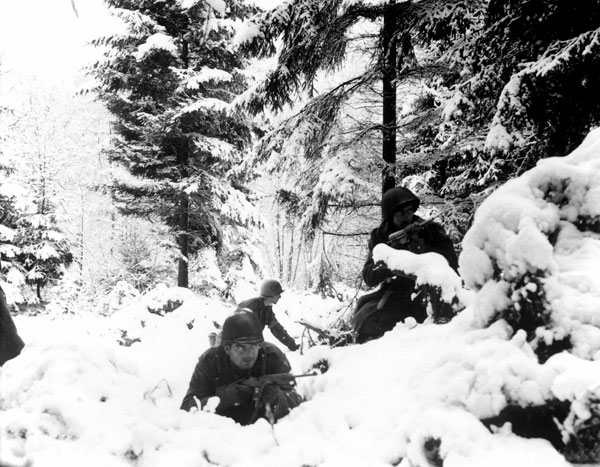
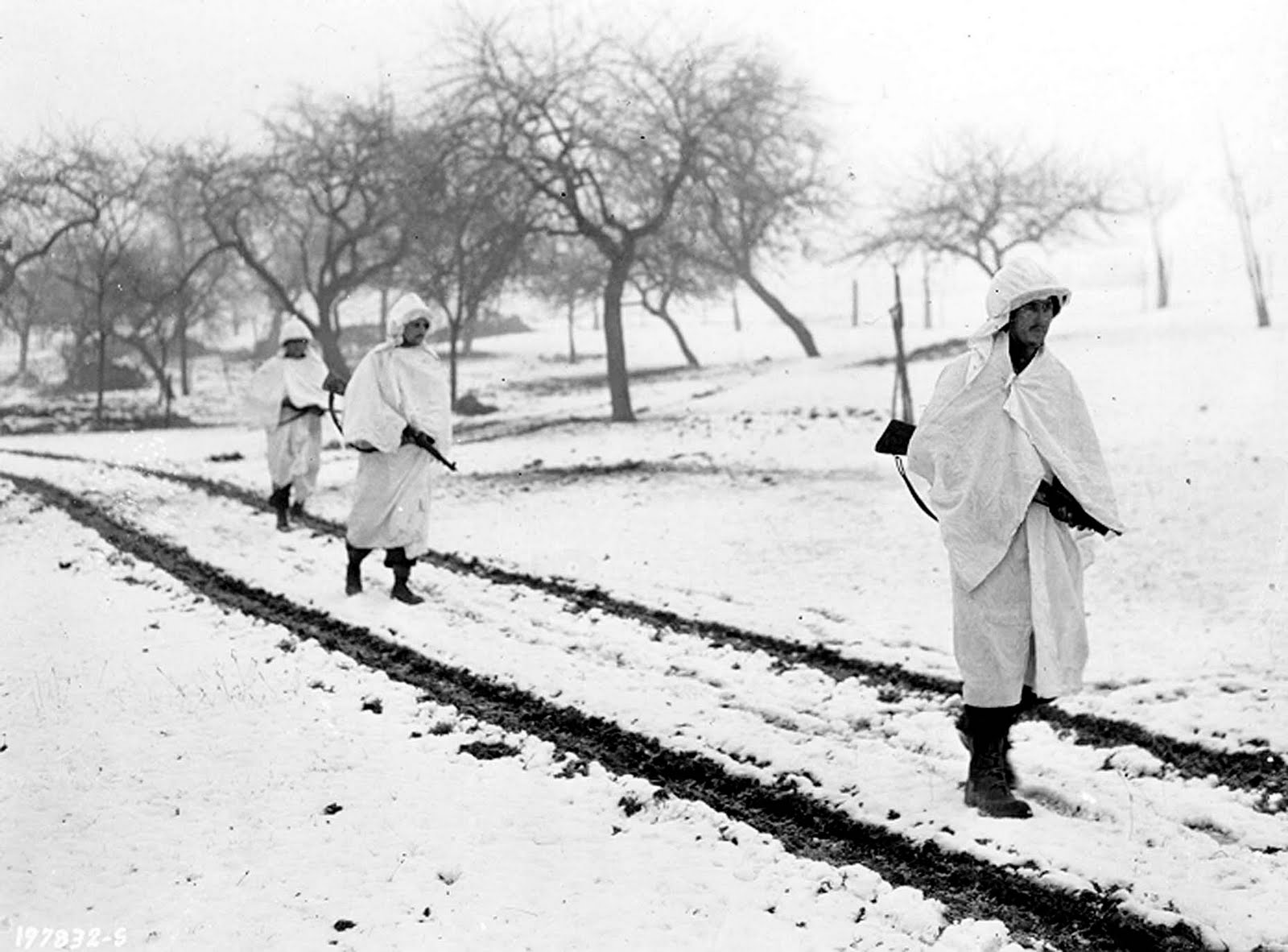
Snow and ice reduced mobility and control
Winter roads reduce traction and increase the risk of vehicles sliding into ditches, blocking the route for everything behind them. In a column, a single vehicle off the road can turn into a traffic jam that lasts hours—sometimes longer if recovery vehicles can’t reach the site.
Mud turned detours into disasters
In the Ardennes, detours weren’t just inconvenient—they were often dangerous. When vehicles attempted to move off the road onto soft earth, tanks could mire down in mud. U.S. Army historical text explicitly notes tanks becoming mired when trying to detour onto soft ground. (Webdoc)
When a tank is stuck:
- it can’t maneuver to present better armor angles,
- it becomes easier to range,
- it’s harder to evacuate under fire,
- and it’s more likely to be abandoned if fuel and recovery assets are scarce.
Suggested image placement:
Insert image: “Tanks and infantrymen push through snow…” (Wikimedia Commons)
Mines, demolitions, and engineers: the choke tightened from both sides
German armor in the Bulge didn’t just face enemy tanks. It faced an environment where U.S. engineers could:
- blow bridges,
- mine approaches,
- create roadblocks,
- and delay advances until heavier anti-tank assets arrived.
Those obstacles mattered because the German plan required momentum. The Tank Museum’s analysis highlights that delays were “problematic” because the plan depended on speed, and that obstacles like minefields and blown bridges prevented a fast start. (The Tank Museum)
Suggested image placement:
Insert image: “Combat engineer setting a charge” (Wikimedia Commons)
Insert image: “Mined bridge in Malmedy” (Wikimedia Commons)
Fuel and recovery: why many “losses” weren’t dramatic explosions
When people picture tank losses, they imagine burning wrecks. In the Ardennes, many losses were quieter—and arguably more damaging.
- Delays increased fuel consumption and reduced the chance of capturing enough to keep moving. (The Tank Museum)
- Breakdowns were increasingly common, worsened by poor late-war production quality and inexperienced crews, and the German system often lacked adequate recovery vehicles and spare parts to pull disabled tanks out under combat conditions. (The Tank Museum)
- As the battle shifted and ground was retaken, broken-down German vehicles were increasingly stranded where recovery was impossible. (The Tank Museum)
A famous example is Kampfgruppe Peiper: slowed by resistance, jams, and obstacles, it ultimately reached La Gleize and—short of fuel and under pressure—was forced to abandon remaining tanks and withdraw. (The Tank Museum)
This is where terrain intersects logistics in a deadly way: a breakdown in open country might be a repair job; a breakdown in a forest corridor under pressure becomes a permanent loss.
When the skies cleared, road-bound armor became airborne prey
The early phase of the offensive benefited from poor weather that grounded much Allied tactical airpower. But the weather didn’t last.
A U.S. Air Force museum fact sheet notes that poor weather initially kept tactical airpower grounded, and that when conditions improved on December 23, 9th Air Force bombers and fighter-bombers resumed operations and began inflicting heavy damage on German forces. (Air Force Museum)
The National WWII Museum describes the same turning point: once skies cleared on December 23, Allied fighters sought out road-bound German columns and destroyed hundreds of vehicles, including a major attack that helped halt the German 2nd Panzer Division short of the Meuse. (nationalww2museum.org)
Terrain again mattered here: columns restricted to roads are easier to find, easier to track, and easier to hit repeatedly.
So how high were German tank losses?
Exact totals vary by source and by definition (tanks vs. assault guns vs. all armored fighting vehicles; destroyed vs. abandoned vs. captured). But the trend is not in doubt: German armored losses were severe.
One analysis (The Tank Museum) estimates that by 15 January 1945, Germany had lost just under half of its Panzer IVs committed to the battle and around 40% of its Panthers—“perhaps 320 tanks in all”—and emphasizes that not all of these were combat kills. (The Tank Museum)
That last point is essential: in the Ardennes, terrain-driven delays and chokepoints increased the share of non-combat losses—vehicles abandoned, immobilized, or unrecoverable.
The Ardennes lesson: “superior” tanks can be made inferior by geography
German tanks were formidable, and in direct engagements they could be terrifying. But the Battle of the Bulge demonstrates a larger truth:
- A tank’s advantage shrinks when it cannot maneuver.
- A powerful tank gun means less when the fight is decided at 50–100 yards around a bend.
- Thick armor means less when you’re immobilized and cannot withdraw or be recovered.
- An armored breakthrough strategy collapses if the terrain forces armor into a handful of predictable corridors. (The Tank Museum)
In the Ardennes, the forest and road network did not merely “slow” panzers—it reorganized the battlefield into chokepoints. And chokepoints allowed smaller defending forces to trade space for time, set ambushes, and apply concentrated killing power exactly where German armor was forced to go.
That is why German tank losses were so high: not because the panzers suddenly became bad weapons, but because the Ardennes made them fight in the worst possible way—road-bound, predictable, and stoppable.